
How Sculpting Buddhist Figures Shaped Wang Lei’s Tattoos
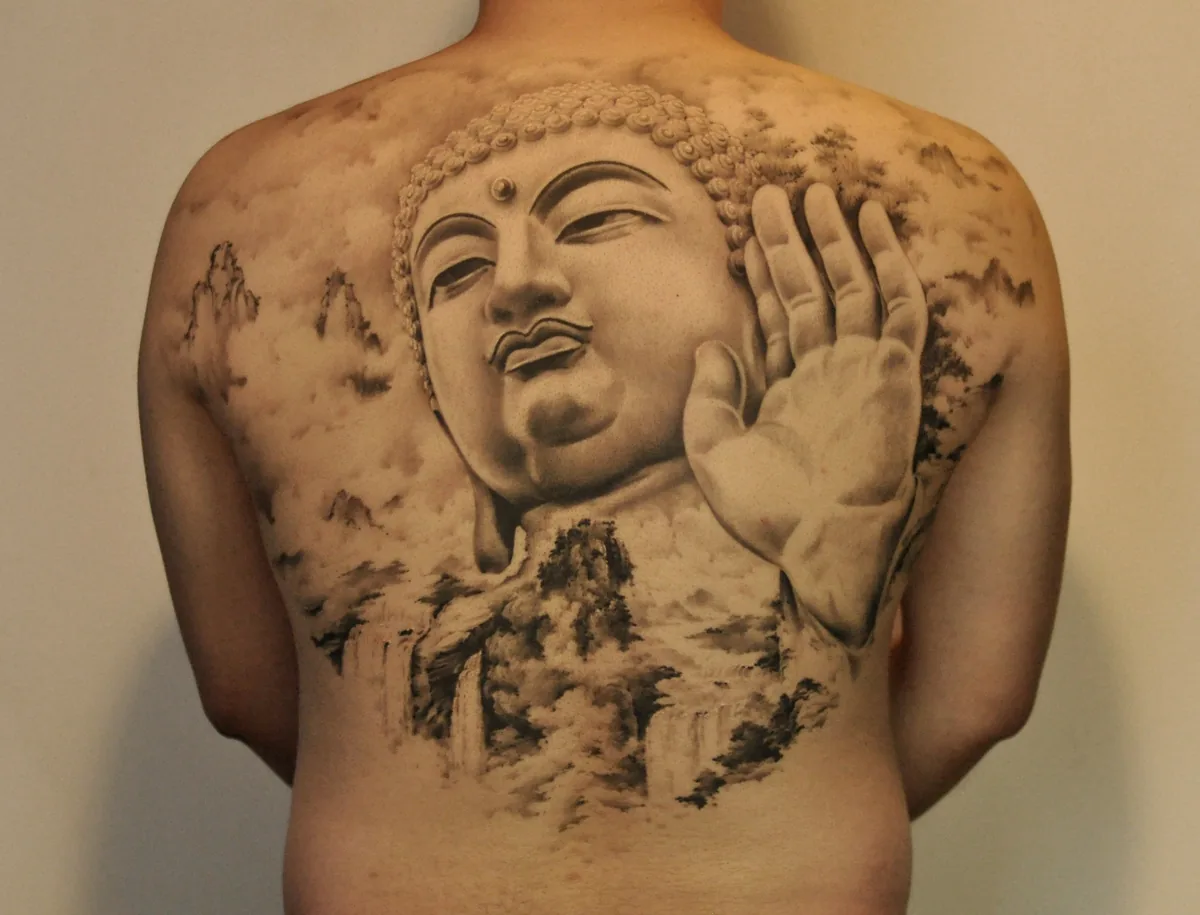
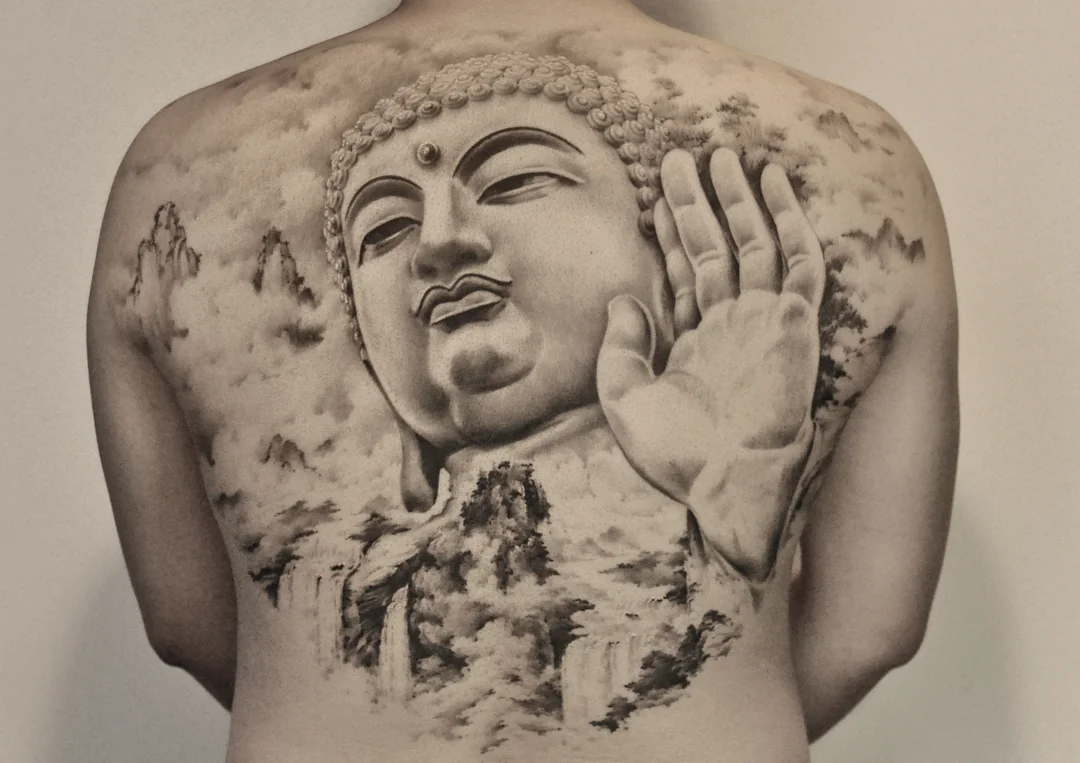
In Wang Lei’s black-and-grey backpiece Buddha, Mountains and a Sea of Clouds, the Buddha’s face turns slightly to one side. Light catches the bridge of the nose. A narrow band of shadow gives the half-closed eyelids their thickness. Beside the cheek, a hand is raised with the palm facing out. Below the wrist, pale waterfalls descend between dark rocks.
Wang learned to model a face in wax before he learned to tattoo one. According to Wang’s team, Bai Jinxing watched Wang grow up and was a father figure to him. Wang was the only apprentice Bai accepted apart from his own children. In 2000, Wang began three years of training in Buddhist sculpture with Bai in Yagou, part of Harbin’s Acheng district in northeastern China.
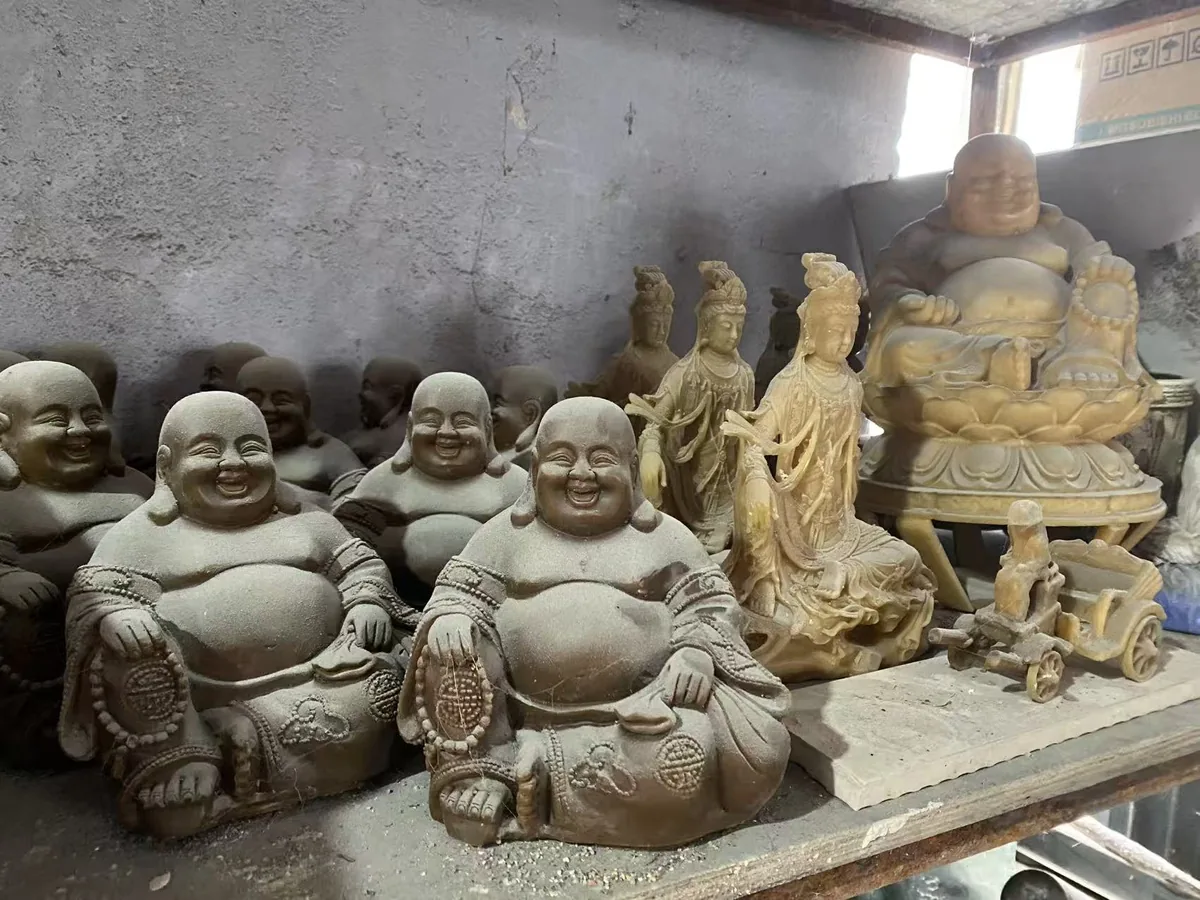
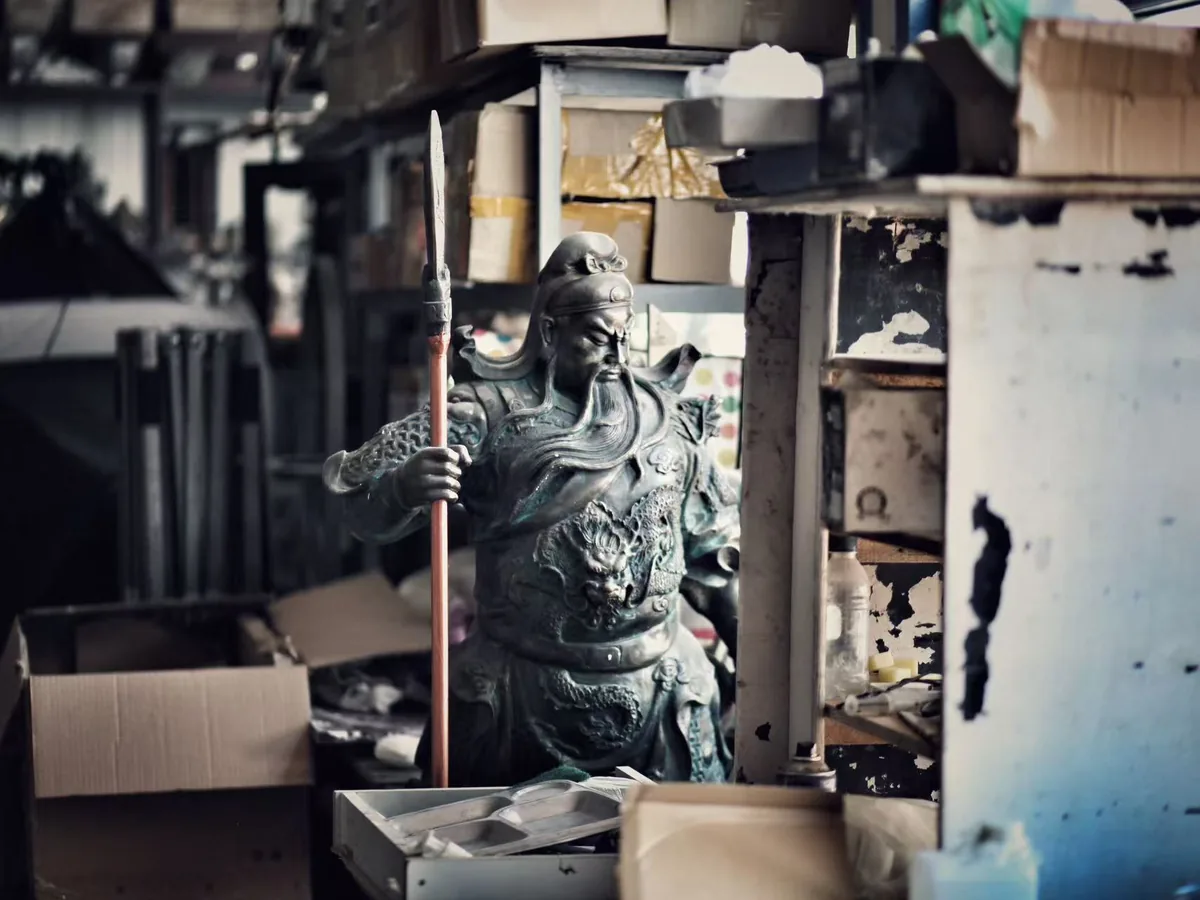
In a photograph supplied by Wang’s team, several smiling Buddhas he made sit side by side. On one figure in the front row, the cheeks rise with the corners of the mouth until the eyes are little more than two curved lines. The tattooed Buddha’s lids trace a similarly shallow curve, giving its downcast gaze a quiet expression.
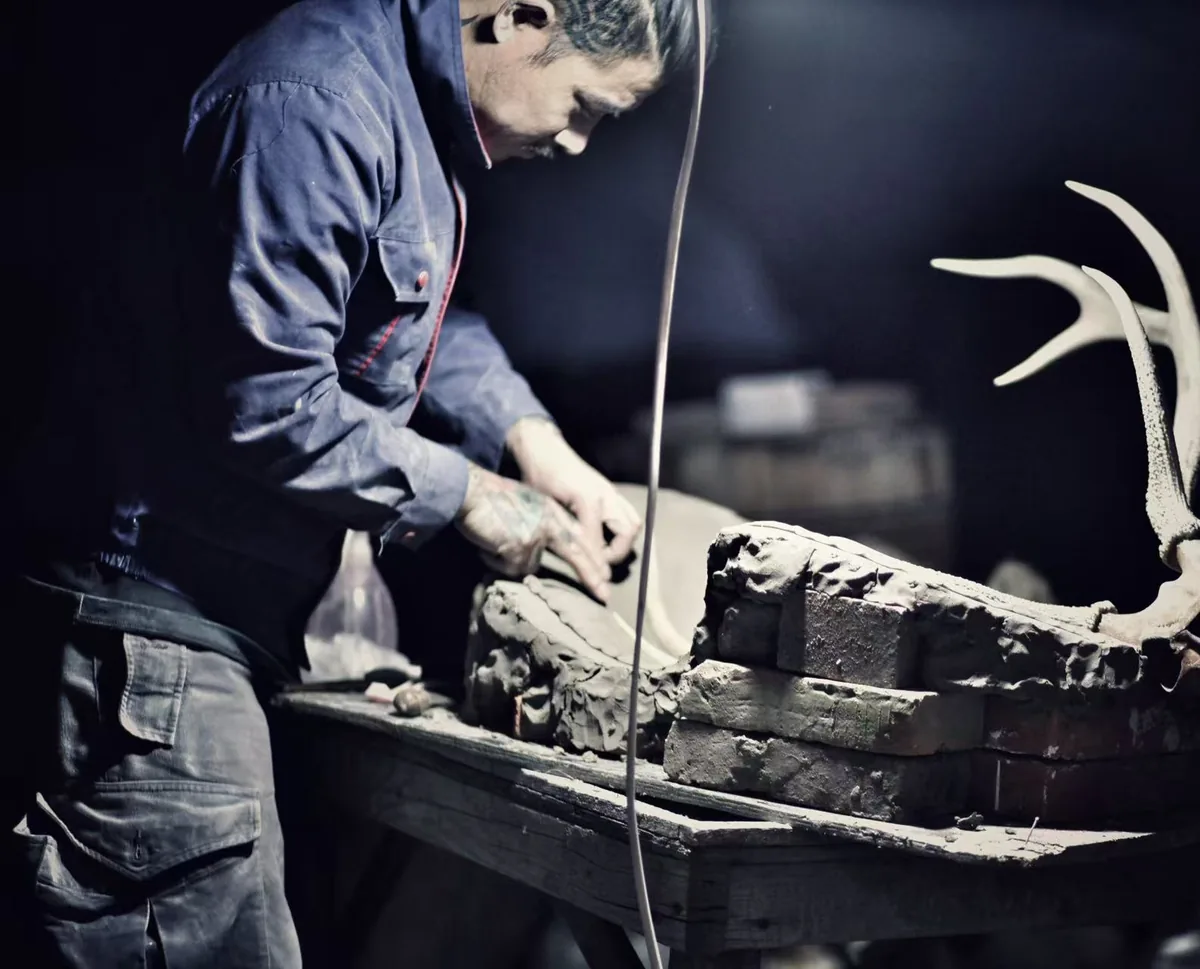
In lost-wax casting, a mould is made around a wax model. Heat melts the wax, and molten bronze is poured into the space it leaves behind. A fold in a robe or the fullness of an eyelid can survive that passage from one material to another. The sculptor can turn the model to see just how far the brow projects over the eye. Shine light on the finished bronze and the brow will cast its own shadow.
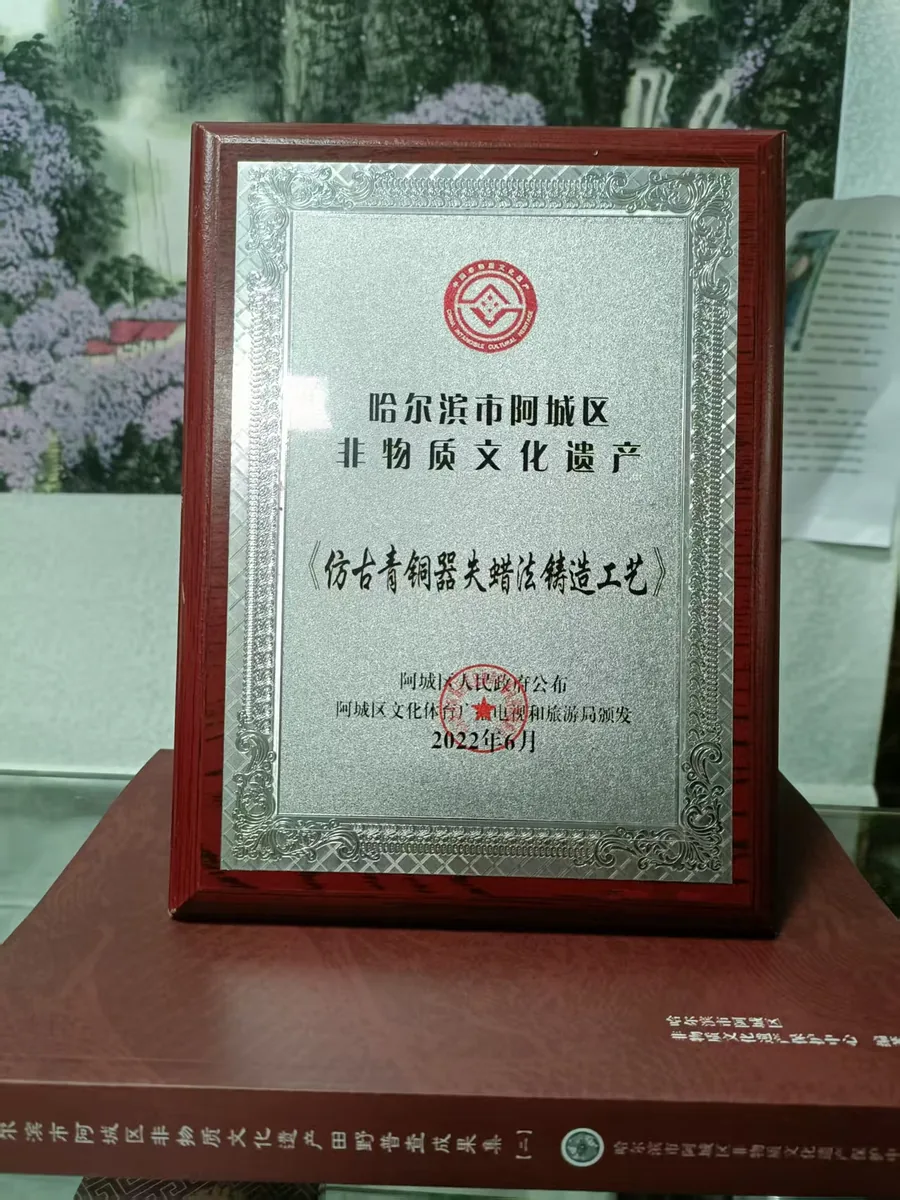
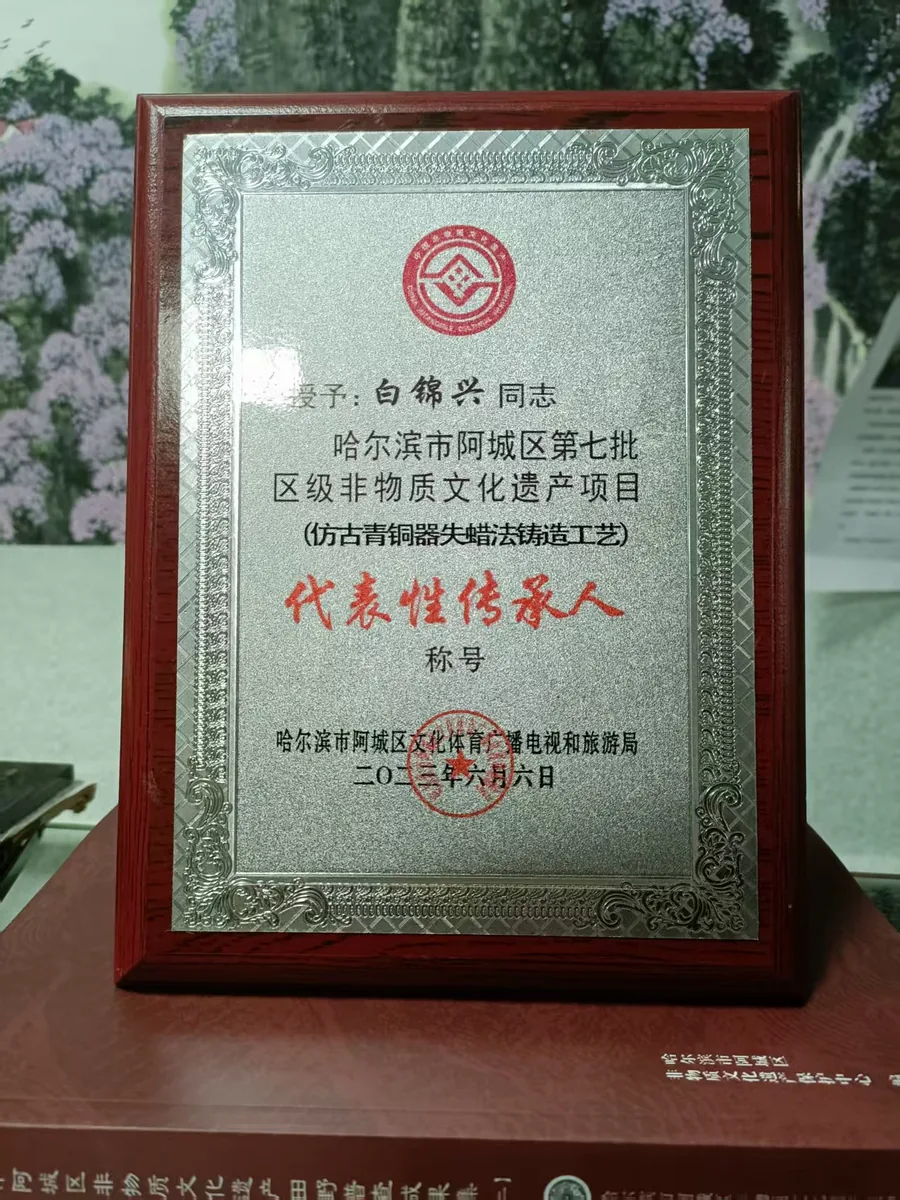
According to the family’s own account, its bronze-casting tradition dates to 1790, and Bai is its fifth-generation practitioner. In June 2022, the Acheng District government listed the traditional lost-wax casting of antique-style bronzes as a district-level intangible cultural heritage project. On 6 June 2023, Bai was named a district-level representative bearer of the project. Wang is not yet an officially recognised bearer of the listed project.
Wang turned to tattooing in 2003. His studio, Lei Shi Tattoo, traces his approach to black-and-grey realism to those years of sculpture training. In the backpiece, fine bands of shadow separate the raised fingers. At the base of the palm, the shading spreads more gradually, making the hand appear full. The waterfalls below owe their brightness to the dark rock on either side.
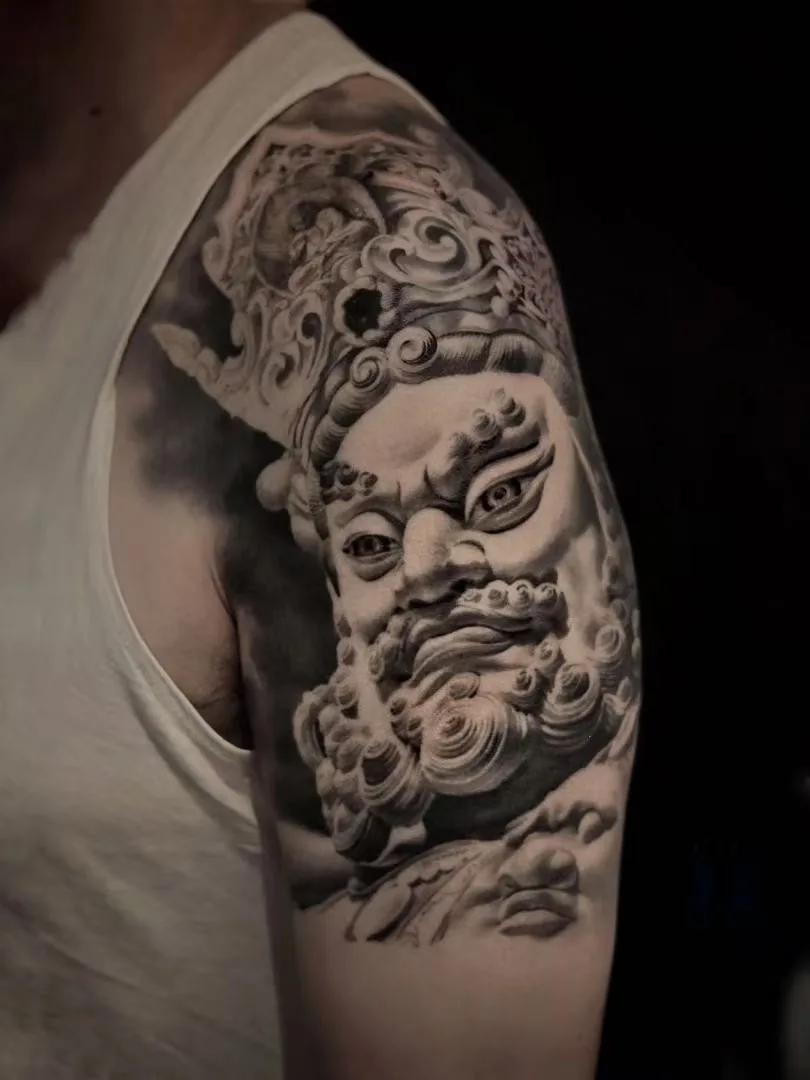
In another black-and-grey tattoo by Wang, an ornate crown follows the curve of the shoulder. Beneath it, a pair of wide-open eyes meets the viewer’s gaze. The brows rise at a sharp angle. Across the chin, light catches the outer edge of each curl of the beard, with deep shadow where one curl overlaps the next. The sternness of this face and the stillness of the Buddha’s are already apparent in the shape of the eyes.
In late 2006, Wang opened Wang Lei Tattoo in Beijing’s Di’anmen neighbourhood. The studio grew into Lei Shi Tattoo. Wang’s clients have included table tennis player Zhang Jike and basketball player Zhu Fangyu. The brand lists 12 working studios, including its first Southeast Asian location, which opened in Johor Bahru, Malaysia, in 2024. In the Buddha backpiece, that apprenticeship comes back into view in the sliver of grey that gives a lowered lid its curve.
Sources
- The Buddha backpiece appears in the “Practice” section of Wang’s profile and in the photographs supplied by his team (photograph 1). The crowned figure on the upper arm is shown in photograph 2, also supplied by Wang’s team. Official portfolio · Buddha backpiece on Wang’s profile · Full image on the studio’s website
- Wang’s team supplied the account of his relationship with Bai and of Bai’s apprentices. The date of 1790 and the five generations come from the family’s account. The project name, district-level designations and dates were checked against photographs of both plaques supplied by Wang’s team. Project plaque · Bai Jinxing’s plaque
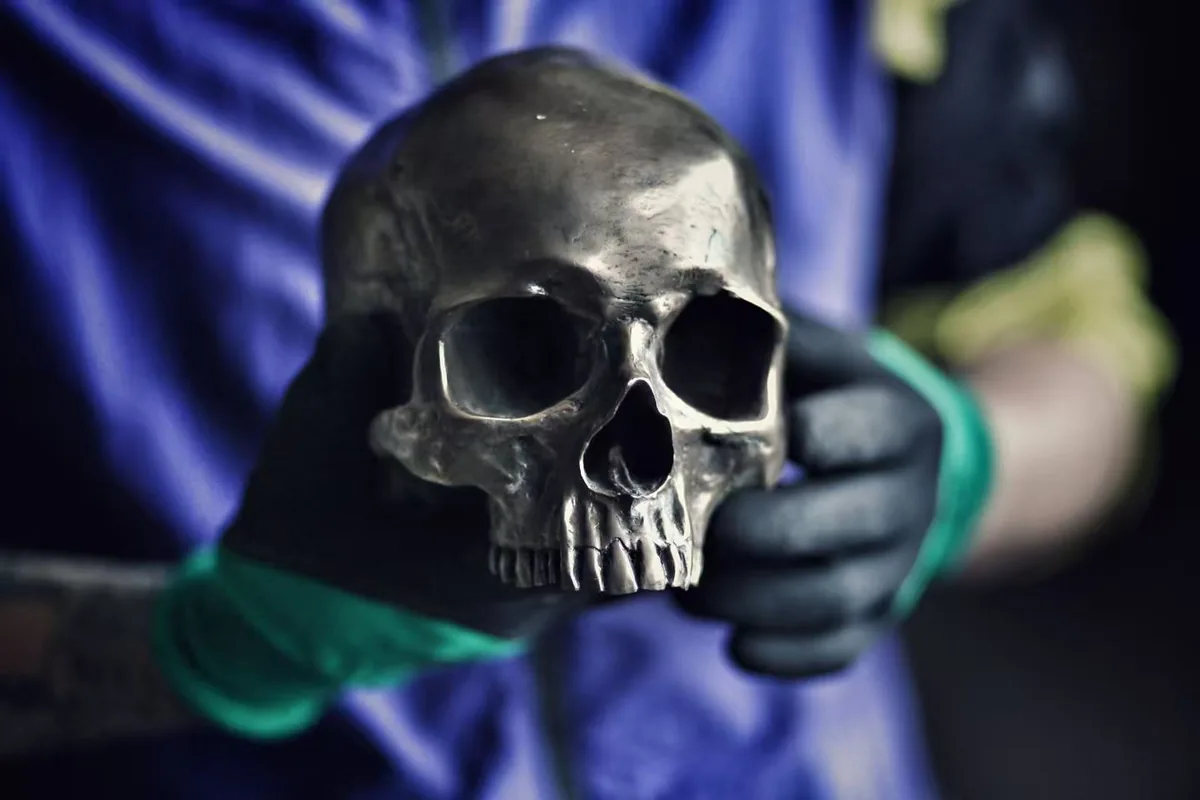
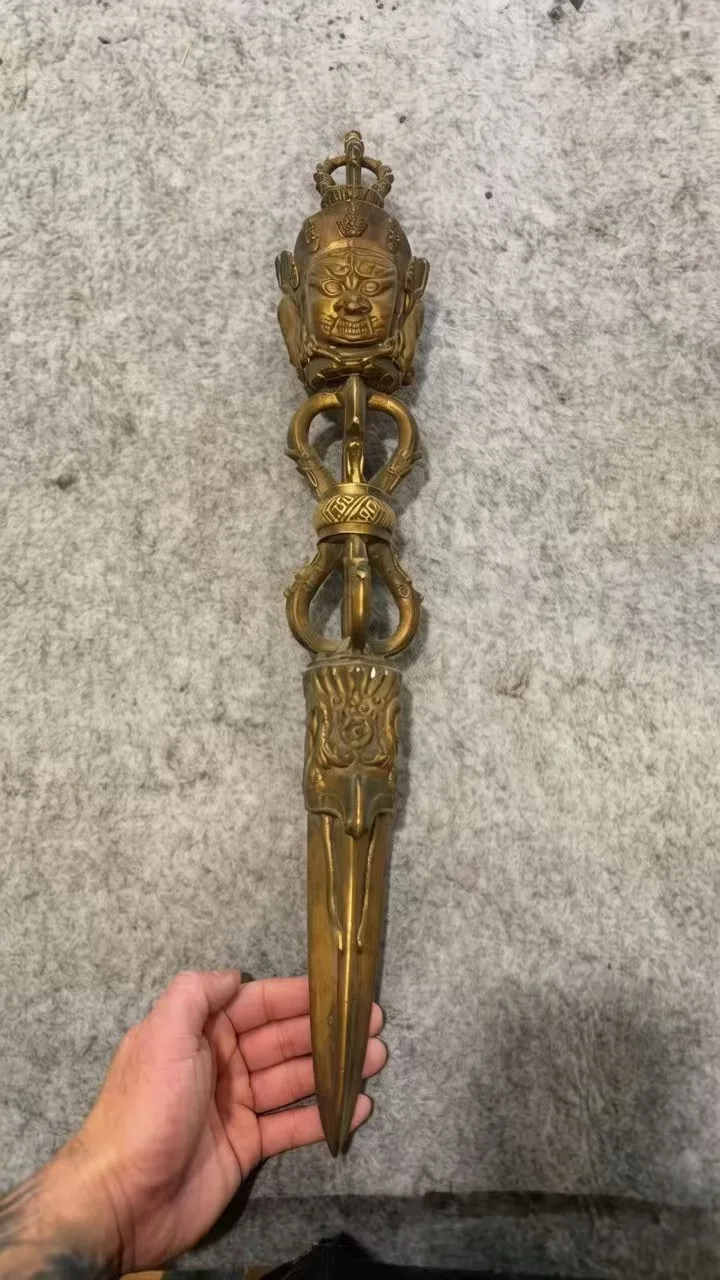
- Wang’s team identified him as the person at the workbench in photograph 3 and confirmed that he made the tattoos in photographs 1–2 and the figures and objects in photographs 4–7.
- The casting description follows the Palace Museum. Studio history, locations and clients are drawn from Lei Shi Tattoo’s official site. The Palace Museum on lost-wax casting · Wang’s profile and studio timeline · Johor Bahru studio
Wang Lei: profile · About Lei Shi · International visitors · Book a consultation →